


Light, gaze and wingbeat – birds of prey through Silas Orbe's lens
Photographer Silas Orbe has brought his camera to the Eagle Reserve, and his pictures are a real pleasure to spend time with. We have seen many photographs of our birds over the years, but these must be counted as top class. Here we take a closer look at what makes them so good – from the sharpness in the eye to the timing in the air.
We have worked with birds of prey since 1976, and we see our birds every day. That is exactly why it delights us when a photographer shows them in a way that makes us look twice. Silas Orbe's pictures have the calm and precision that mark good nature photography: the focus is where it should be, the light is handled with care, and the bird is allowed to take centre stage.
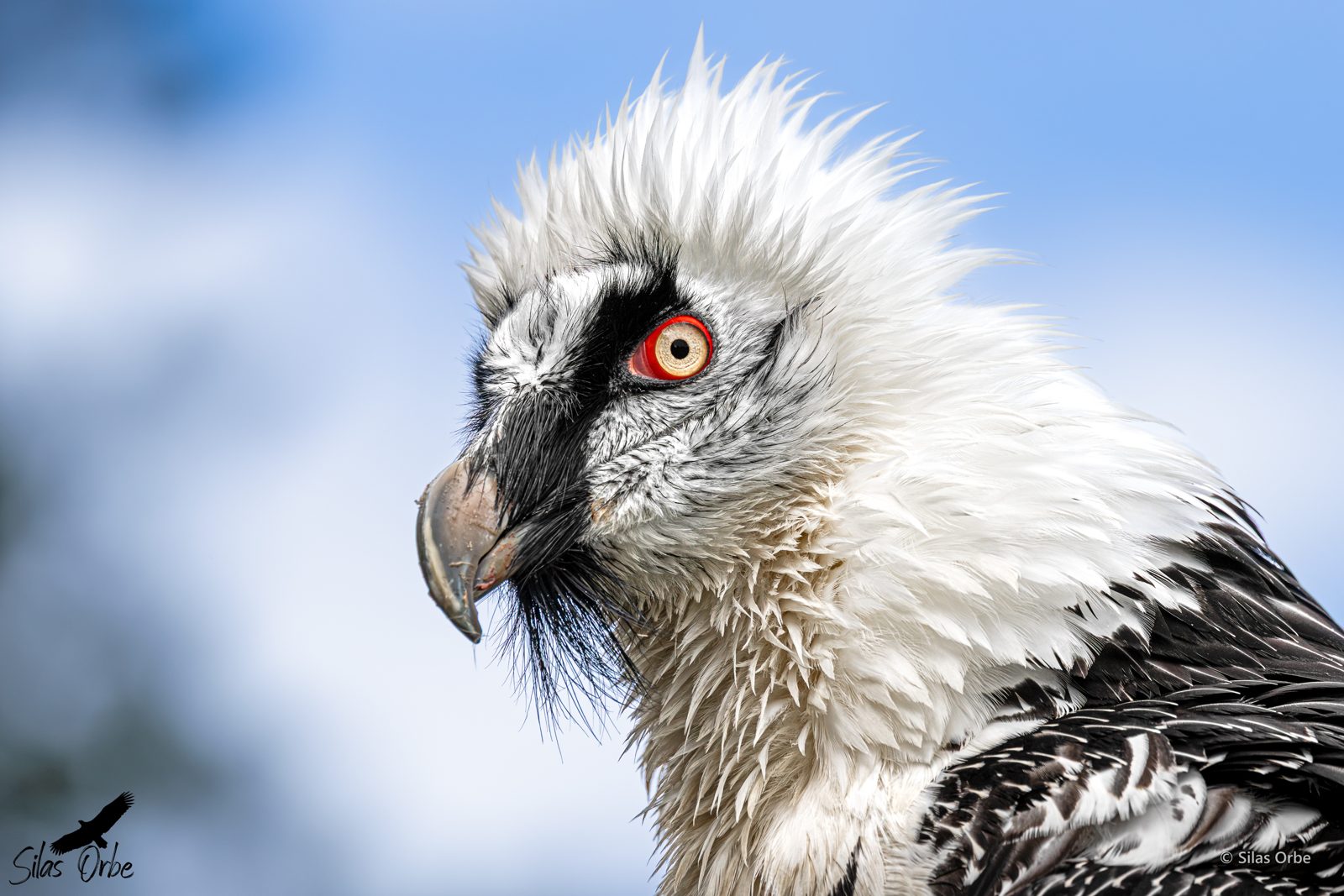
Bearded vulture. Photo: Silas Orbe
The bearded vulture portrait is built around the eye. The red eye-ring is pin-sharp, and the sharpness carries on into the fine, bristling feathers of the pale collar. The shallow depth of field turns the sky behind the bird into a soft blue surface with white clouds that never steal attention. The light is even and soft, so the white feathers hold detail right into the highlights without anything burning out. The head is placed in the left part of the frame, looking into the picture, which leaves good space around it.
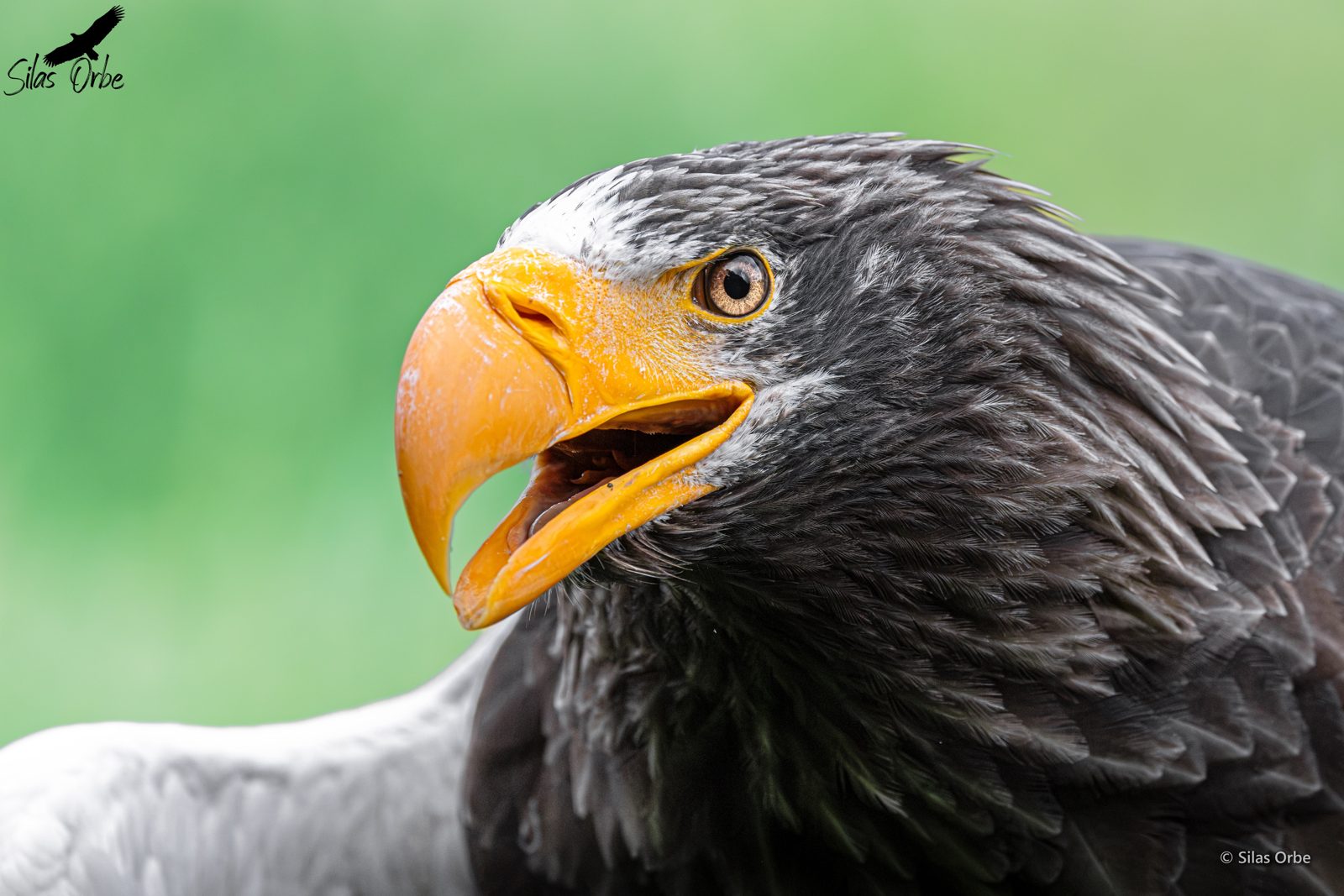
Steller's sea eagle. Photo: Silas Orbe
The Steller's sea eagle is photographed up close, with its huge orange beak slightly open. The eye is in sharp focus, and the feathers on the head have a fine, almost tactile texture. The background dissolves into calm green bokeh that complements the orange beak and the dark plumage. The beak cuts diagonally into the frame and gives the portrait power and direction.
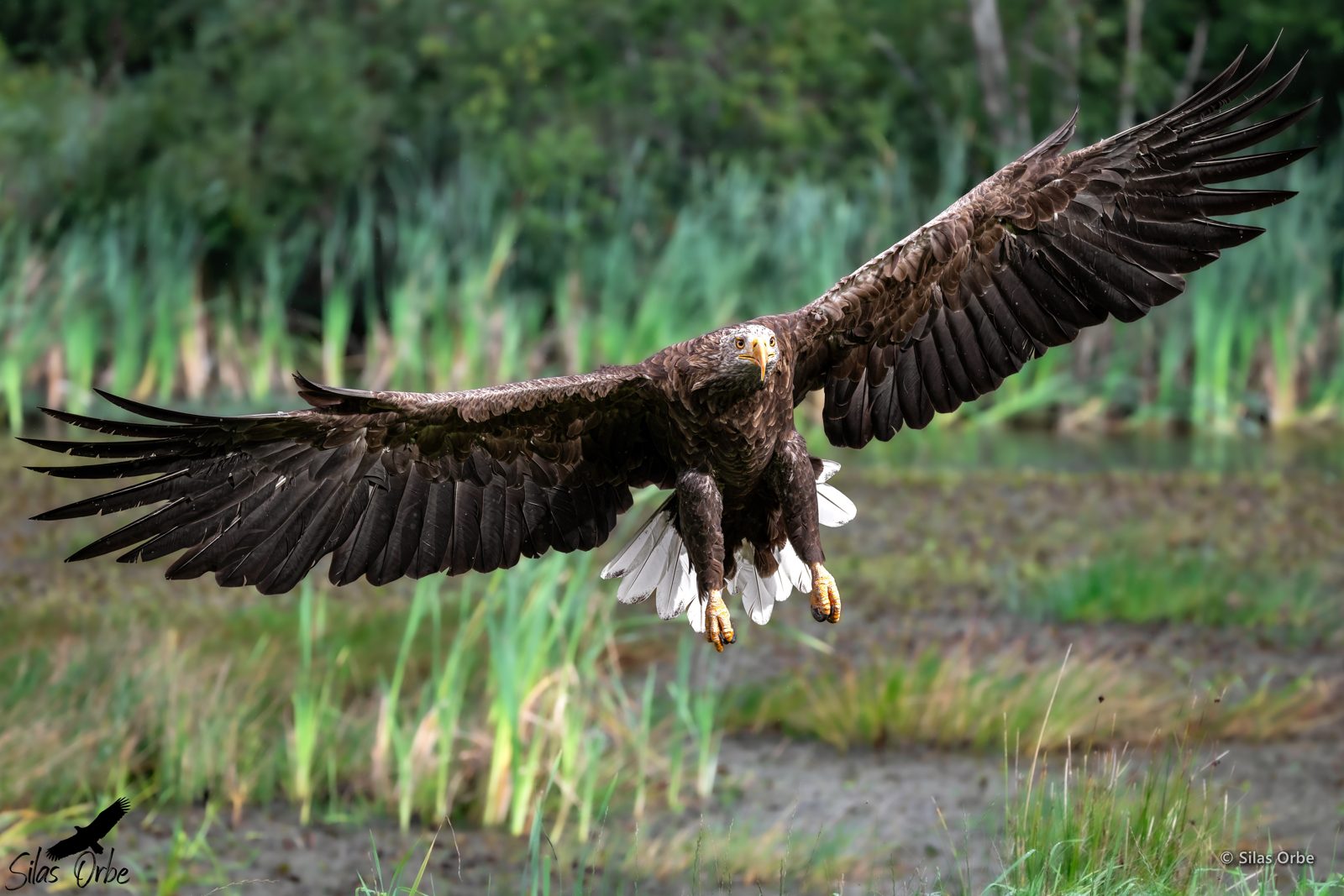
White-tailed eagle. Photo: Silas Orbe
Here it is the timing that impresses. The white-tailed eagle is captured in the very second when the wings are fully spread and the feet are reaching forward before landing. The wingtips are sharp and the motion is frozen, while the wetland with reeds and grass forms a natural green frame. The wings fill the width of the picture and create a strong horizontal line.
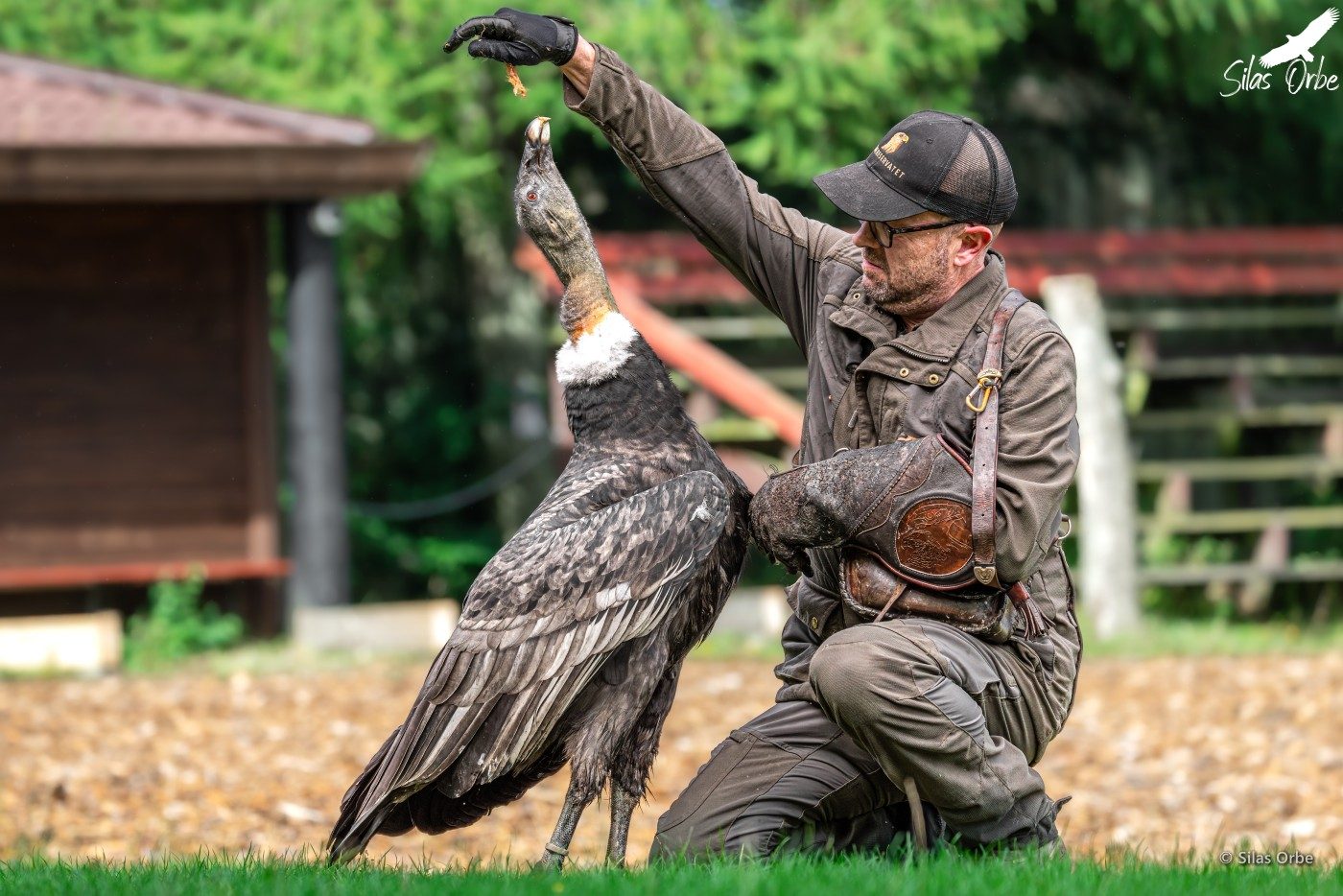
Falconer Peter Frank Wenzel and the condor Molina. Photo: Silas Orbe
A picture about trust. The condor Molina stretches her neck and head up towards falconer Peter Frank Wenzel's raised hand as he kneels in the grass beside her. It is a whole small story in a single frame: both the bird's and the falconer's gaze are directed at the raised hand, and the white neck ruff and dark wings stand out clearly against the warm, out-of-focus background of wooden huts and greenery. The sharpness rests on the two main characters, and the light is even, so there is detail in both the condor's dark feathers and the falconer's clothing.
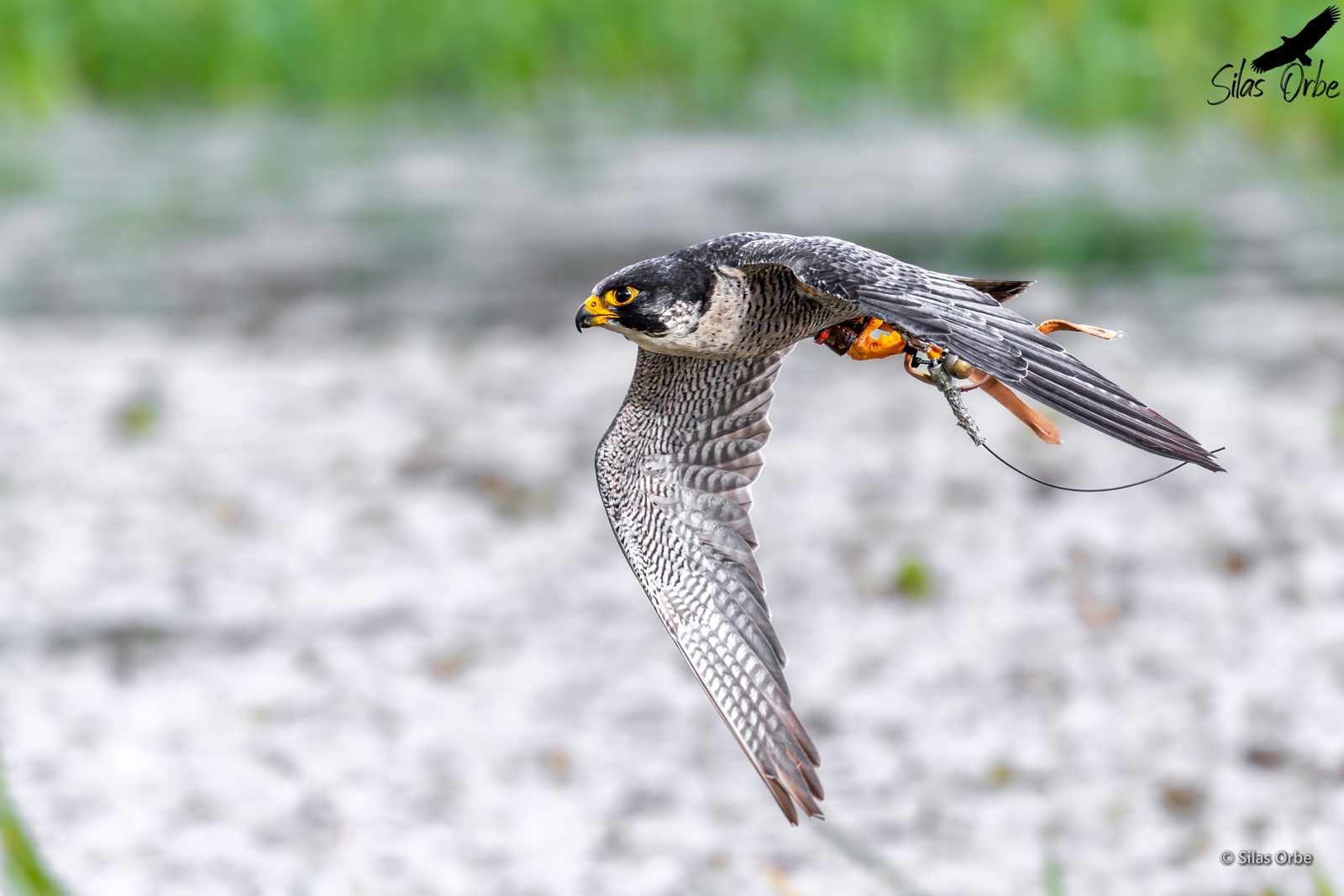
Peregrine falcon in flight. Photo: Silas Orbe
The peregrine is one of the hardest birds to photograph in flight. Silas has it sharp, with the wings in a powerful downstroke, and the falcon flies into the frame with space ahead of it. The bright, blurred background makes the bird's dark head and barred underside stand out clearly.
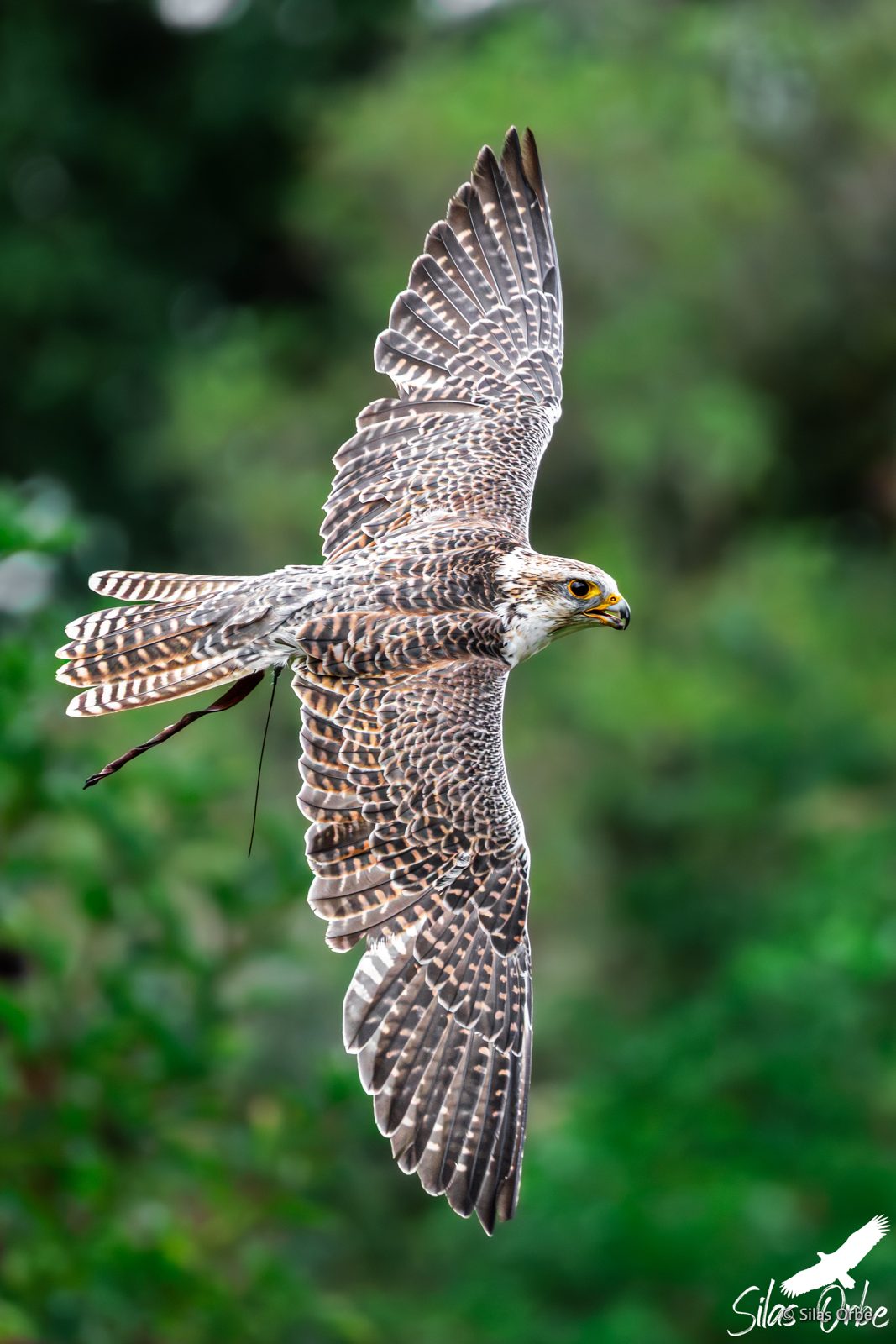
Saker falcon in flight. Photo: Silas Orbe
In portrait format the picture follows the saker falcon with its wings stretched up and down the length of the frame. Every single flight feather can be made out, and the deep green background is a soft, dark contrast to the pale, patterned plumage.
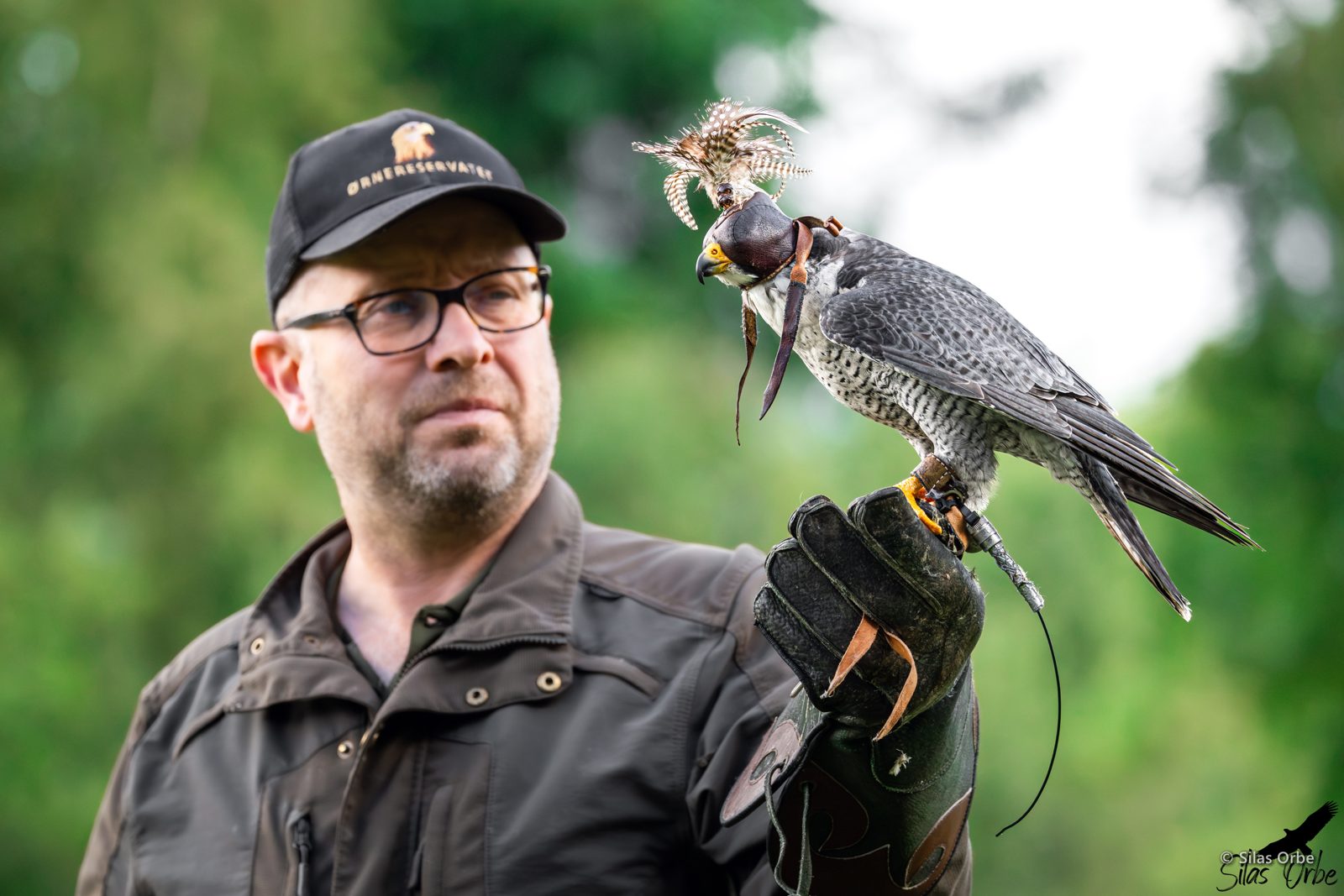
Falconer Peter Frank Wenzel with a hooded peregrine falcon. Photo: Silas Orbe
A picture about the partnership between falconer and bird. The focus is on the hooded falcon, while falconer Peter Frank Wenzel's gaze leads the eye up towards the bird. The soft light brings out fine detail in both feathers and hood.
The Eagle Reserve is now closed for the winter, but the birds are in good hands, and we are already looking forward to welcoming you back for our flying demonstrations at Easter 2027. Thank you to Silas Orbe – a very skilled photographer – for sharing his pictures with us.