


Spectacled owl in North Jutland: Tropical owl moves into Eagle World
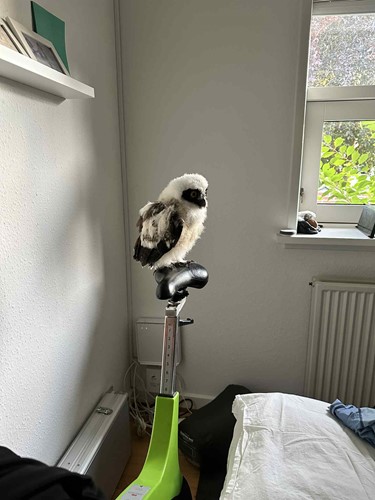
A new bird with a remarkable gaze has found its way to Eagle World in North Jutland. Its name is Pulsatrix perspicillata, but it is commonly known as the spectacled owl – and that name is no coincidence. With its yellow eyes framed by white feathers that form clear “spectacles”, it is one of the most distinctive owl species in the world.
The spectacled owl comes from the tropical regions of Central and South America, where it lives in dense rainforest, often hidden in the treetops in complete silence. But now it can be seen in Denmark – more precisely at Eagle World between Tversted and Skiveren – where it has just become part of the permanent collection.
– We are delighted to be able to present this species to our visitors, says Peter Frank Wenzel, managing director of Eagle World. – It is not just a beautiful bird – it is also an owl with fascinating behaviour and an important role in its natural ecosystem.
Raised by human hands
The spectacled owl at Eagle World has been raised in human care since it was almost newly hatched. Falconer and keeper Emilie has been responsible for the young owl throughout its upbringing.
– From day one it was hand-fed and made comfortable with human contact, says Emilie. – That builds strong trust and allows us to share knowledge about the species close to the public – without compromising animal welfare or the bird’s natural instincts.
Today the spectacled owl is at ease with people and can therefore become part of future educational activities at the reserve.
A tropical bird of prey with special abilities
The spectacled owl is a nocturnal bird of prey that in the wild feeds on small mammals, bats, insects and birds. With its silent flight and sharp eyesight, it is able to hunt in the dark. It is known for its characteristic deep call, which resembles knocking on wood – a call that has earned it the nickname “the knocking owl” in Brazil.
The bird grows up to 45 cm long and has a wingspan of almost one metre. It is the largest owl species in the tropical regions of the Americas and can live up to 30 years in human care.
From rainforest to bird of prey reserve
– It is a very special experience to work with a bird that is both wild and trusting at the same time, says Emilie. – It still has its nocturnal instinct, but it knows we are there and reacts with calm and curiosity.
Eagle World already has a wide collection of birds of prey from all over the world, but the addition of the spectacled owl offers a rare insight into tropical owl species that are seldom seen in Europe.
– Many visitors know owls from forests and fairy tales – but the spectacled owl is something quite special. It is both striking and quiet. It almost seems like a creature from another time, says Peter Frank Wenzel.
The bird is now getting used to its new surroundings and will in future be seen closer to the public – both at presentations and at smaller educational events.
FACTS: The spectacled owl (Pulsatrix perspicillata)
-
Range: Tropical regions from Mexico to northern Argentina
-
Habitat: Dense rainforest, forest edges and river areas
-
Size: Approx. 45 cm long, wingspan up to 1 metre
-
Appearance: Dark brown plumage with a pale belly, yellow eyes and white “spectacles” around the eyes
-
Diet: Small mammals, bats, birds, amphibians, reptiles and large insects
-
Lifespan: Up to 30 years in human care
-
Behaviour: Nocturnal, silent hunter with a characteristic drumming call – known as “the knocking owl” in Brazil
-
Breeding: Lays 1–2 eggs in hollow tree trunks; often only the strongest chick survives
-
Status: Not threatened, classified as “Least Concern” by the IUCN
Can you call the owl? Try “Kald på uglen” (Call the owl) with your own voice →
This article is from 4 September 2025