


The vultures that keep the earth clean
Barbatus and Molina come from different sides of the world, but they do the same work. They keep the earth clean. In a new film I talk about why we need them, and why they are so vulnerable right now.
By Peter Frank Wenzel, Ørnereservatet / Eagle World
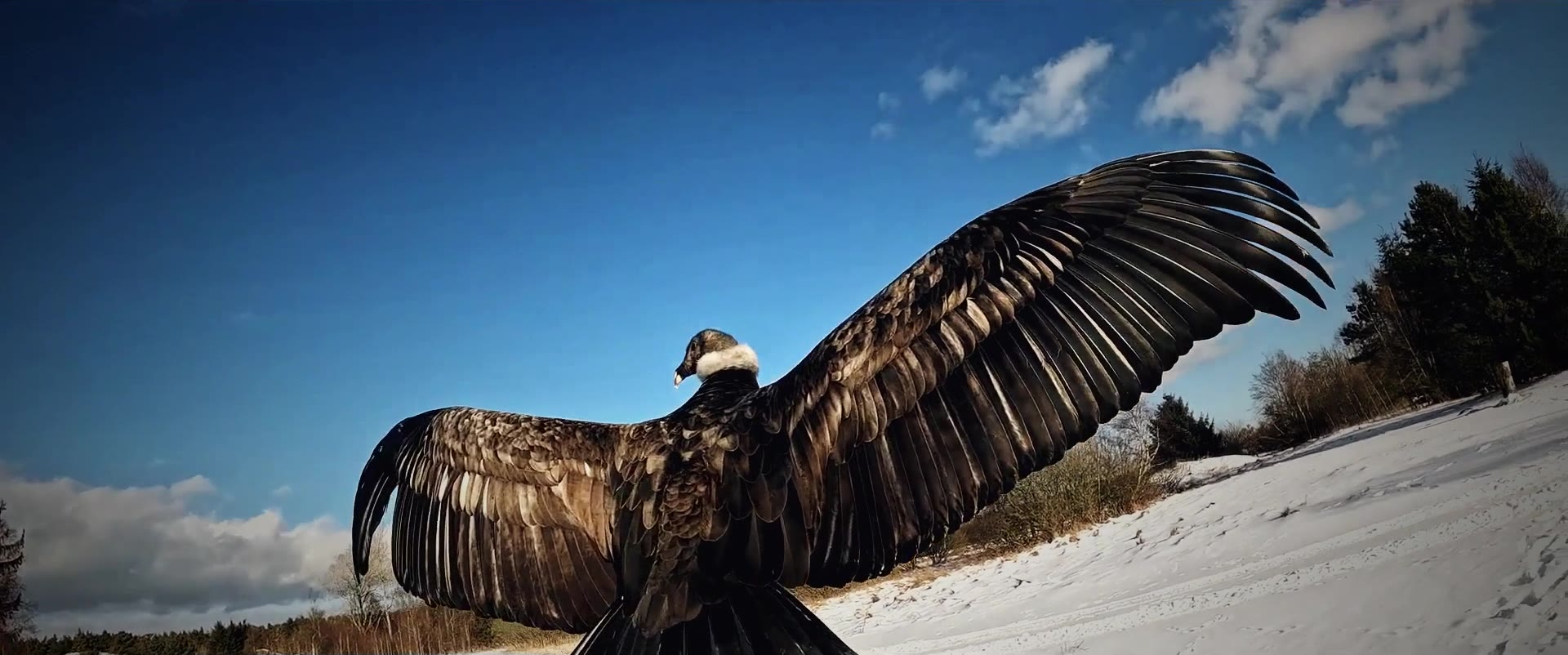
Molina opening her wings in the snow at Ørnereservatet.
Here at Ørnereservatet, Eagle World, Barbatus and Molina live among us. One is a bearded vulture, the other is an Andean condor. They come from different sides of the world, but they both keep the earth clean.
The bearded vulture lives almost only on bones. It drops them onto the rock until they break apart, so it can swallow them. The condor soars over the great mountains and finds what has been left lying there: carcasses and remains. It looks wild and powerful, but it is also very vulnerable.
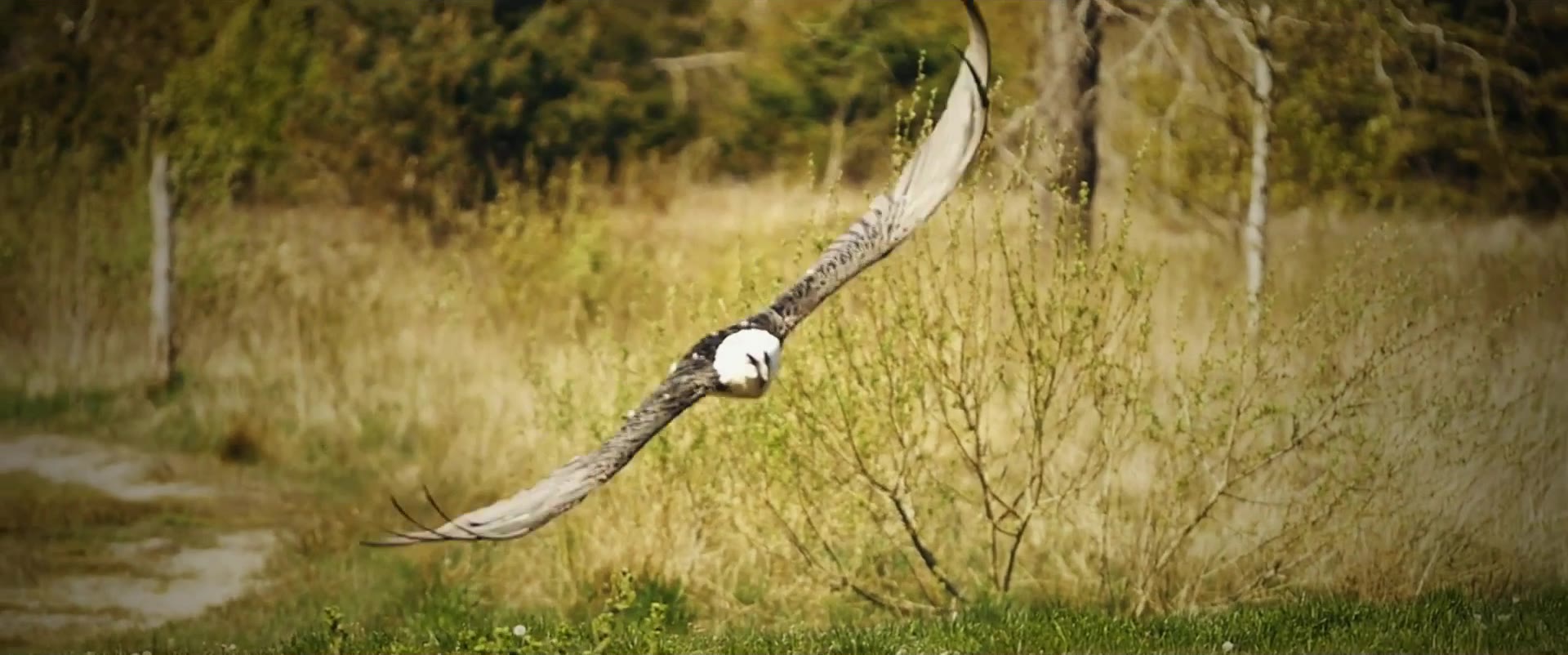
Barbatus in flight over Ørnereservatet.
The world has seen what happens when things go wrong. In India, painkillers have been given to cattle. When the animals died in the fields, the poison ended up in the carcasses. The vultures could not see it, and they died of kidney failure. That struck the Gyps vultures, not these two birds here. But it shows how thin the thread is.
In the Andes and in Europe’s mountains, lead from ammunition is a serious problem, and it has been found in the same kinds of birds. Now there is bird flu as well, and it sits in what they eat. Researchers have warned that vultures and condors are in fact among the most exposed, in several places in the world, right now.
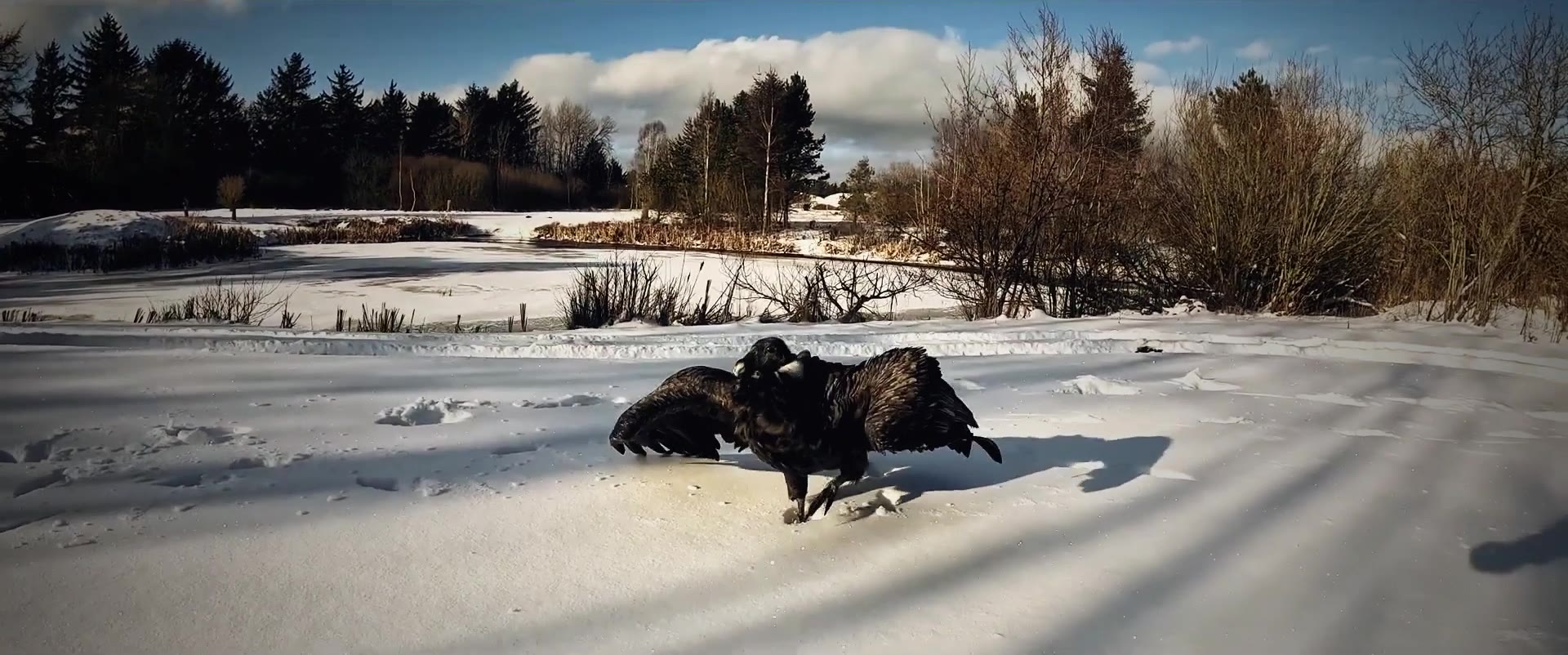
Molina in the snow at Ørnereservatet.
That said, we need them. Without them, the dead lie longer and give rise to other diseases, and then it spreads. We humans also benefit from the vultures being here. So we need to understand what they eat, and we must be careful not to put poison into their food. Farmers and others who keep cattle, out in the areas where there are vultures, must be very careful with this. Vultures are an indispensable part of our ecosystem. Without them it would actually be far more dangerous on planet Earth.
That is what I wanted to say in the film. It is in English, with my Danish voice underneath, and the pictures are our own footage of Barbatus and Molina, filmed here at the reserve. Where we needed to explain something we could not film ourselves, we used simple illustrations.
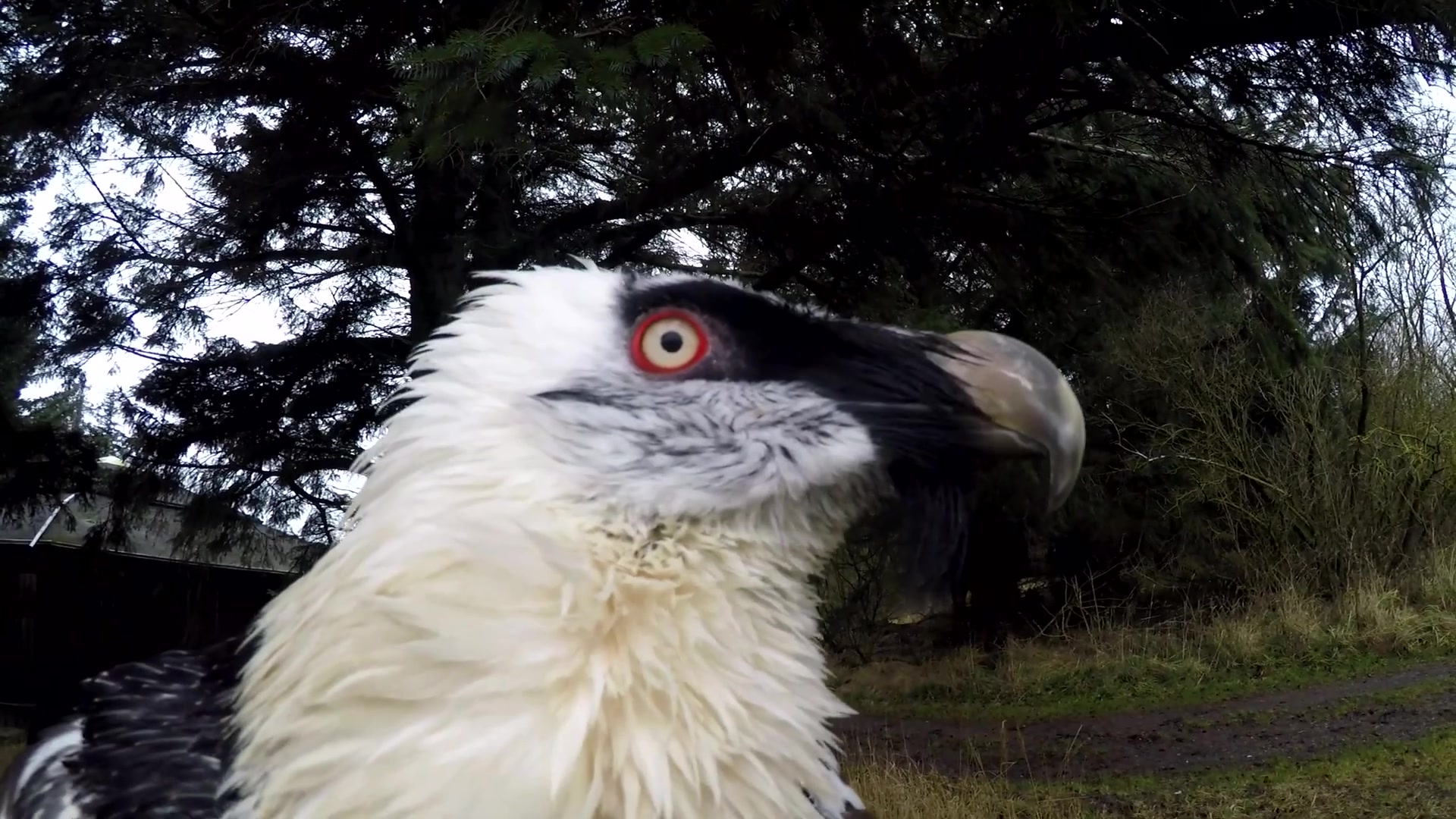
Barbatus close up.
Sources for every factual claim are listed below. You are always welcome here at Ørnereservatet.
Watch the film on YouTube: The vultures that keep the earth clean
Sources
Bearded vulture (Gypaetus barbatus), range and reintroduction in the Alps: Vulture Conservation Foundation.
https://4vultures.org/vultures/bearded-vulture/
https://4vultures.org/our-work/reintroduction-and-restocking/bearded-vulture-to-the-alps/
Andean condor (Vultur gryphus), range: IUCN Red List.
https://www.iucnredlist.org/species/22697641/181325230
Bone dropping and a bone based diet in the bearded vulture: Margalida, A. and Bertran, J. (2001). The Auk 118(3): 785–791. https://doi.org/10.1093/auk/118.3.785
Margalida, A. et al. (2017). Scientific Reports 7: 8061. https://www.nature.com/articles/s41598-017-08812-2
Diclofenac and kidney failure in Gyps vultures on the Indian subcontinent (not a claim about Barbatus or Molina):
Oaks, J. L. et al. (2004). Nature 427: 630–633.
Cuthbert, R. et al. (2011). PLOS ONE. https://pmc.ncbi.nlm.nih.gov/articles/PMC3092754/
Prakash, V. et al. (2012). PLOS ONE 7(11): e49118. https://journals.plos.org/plosone/article?id=10.1371/journal.pone.0049118
The Peregrine Fund, on India’s diclofenac ban: https://peregrinefund.org/news-release/indian-government-bans-diclofenac
Lead from ammunition in Andean condors and bearded vultures:
Wiemeyer, G. M. et al. (2017). Science of the Total Environment.
Hernández, M. and Margalida, A. (2009), and “Assessing sources of lead exposure in bearded vultures (Gypaetus barbatus) in the French Alps”, Environmental Research (2026). https://doi.org/10.1016/j.envres.2026.126025
Vulture Conservation Foundation, on lead in the Pyrenees: https://4vultures.org/blog/bearded-vultures-and-lead-poisoning-lead-free-pilot-sites-on-the-cards-in-the-french-pyrenees/
Plaza, P. I. and Lambertucci, S. A. (2018). Science of the Total Environment. https://doi.org/10.1016/j.scitotenv.2018.11.099
Bird flu (H5N1) in carrion, and the 2026 warning that vultures and condors are highly exposed:
Palacios-Sobrevilla, G. et al. “Highly Pathogenic Avian Influenza A (H5N1) Infection in Bearded Vultures in Spain”. https://pmc.ncbi.nlm.nih.gov/articles/PMC12400008/
Morant, J., Santangeli, A., Plaza, P. and Lambertucci, S. A. (2026). “Emerging threat of avian influenza to the world’s vultures”. Conservation Biology. https://doi.org/10.1111/cobi.70372
LIFE PROBV / Foundation for the Conservation of the Bearded Vulture: https://lifeprobv.quebrantahuesos.org/en/avian-influenza-a-new-threat-to-birds-at-risk-of-extinction/
The ecological role of scavengers, that carcasses left longer can give rise to other diseases, follows the same conservation literature, especially the 2026 Conservation Biology letter.
eagleworld.dk