


The "silent" vultures have a whole vocabulary
Vultures have long been called some of the quietest of birds. A new Dutch study of the critically endangered Rüppell's vulture shows the opposite: the birds have a rich and nuanced sound language that they use when they quarrel, court and care for their young — and the chicks already call from inside the egg.
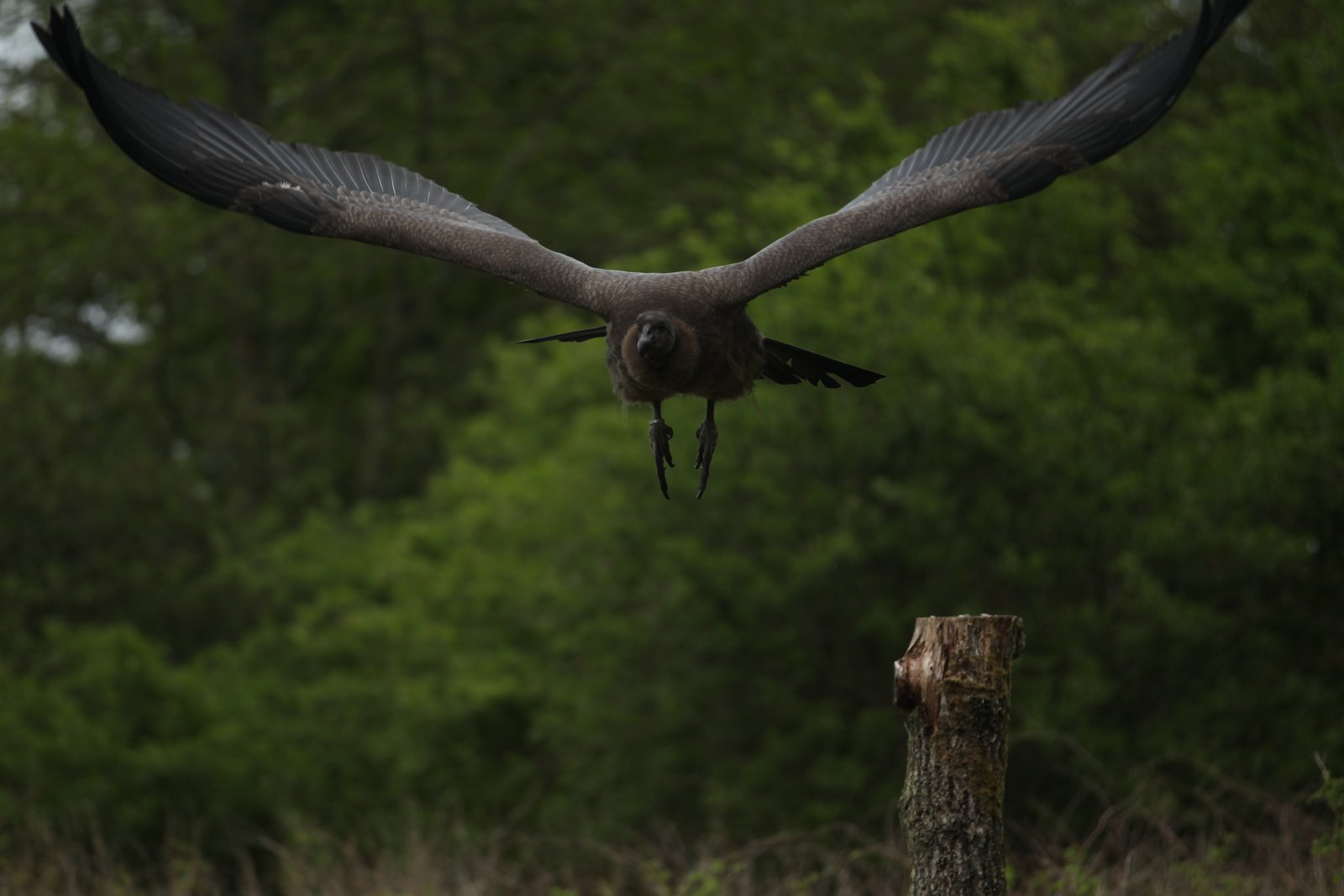 Molina in flight. Photo: Peter Frank Wenzel.
When you picture a vulture, you may see a solitary bird sitting quietly in a tree, or circling silently high overhead. Vultures have long been described as birds with few and rather simple sounds. But no one had properly studied how they use sound. Researchers from Utrecht University have now done so, and the result fits well with something we have written about here at Eagle World before: our Andean condor Molina has expanded her "vocabulary". Read the story in the article Molina – The adult Andean condor expands her vocabulary.
A vulture that lives in a flock
Rüppell's vulture lives in the Sahel and East Africa. It is highly social: it lives in shifting groups and breeds in colonies of up to around 1,000 birds. There is a hierarchy within the group, and when the vultures find a carcass they often meet dozens of other vultures with which they must compete for a place at the food.
The researchers behind the study took as their starting point an idea known as the social complexity hypothesis. It says that animals living in intricate social communities also need more intricate ways of communicating. The idea has mostly been tested on monkeys and humans. Vultures are a good test case, because some species are highly social while others live more on their own, even though they eat the same food and live in the same landscapes.
2,500 sounds from two Dutch colonies
Master's student Connor Proudfoot from Jorg Massen's Vulture Cognition Lab recorded vultures in two bird colonies in the Netherlands: at Diergaarde Blijdorp Zoo in Rotterdam and at the Avifauna bird park in Alphen aan den Rijn. In all, 35 vultures were recorded in many different situations, from feeding and mating to disputes over space. According to Utrecht University he listened for around 150 hours. Because the eggs at Blijdorp are incubated artificially, the researchers could also record eggs and chicks.
That produced 2,500 sounds. Each sound was measured: how long it was, how high the pitch was, and how many "syllables" it consisted of. Using a statistical method that allows sounds to grade into one another, the researchers found many different call types. The press release mentions 16.
Graded sounds say more
Perhaps the most interesting finding is not the number, but that many of the sounds are not sharply separated. Some calls are clearly distinct, while others grade smoothly into one another. According to the researchers, this gives the vultures an extra option: they can probably signal not only that they are aroused, but also how aroused they are.
The researchers found sounds for at least eight kinds of situations:
- when a vulture is attacked and has to give way (metallic groans, screams, grunts)
- when it demands access to the food (a kind of crowing)
- when it defends itself against a threat (hisses and whistling hisses)
- during mating (distinctive mating groans)
- when the birds are peacefully close together (small, quiet groans)
- between parent and chick (begging cries and feeding calls)
- the chicks' own calls
- and calls from the chick while it is still inside the egg
Overall, Rüppell's vulture has more call types than the average for birds. According to the press release, birds have on average six to eight calls. The researchers compare the vulture's repertoire with what is known from several highly social monkeys, for example macaques.
Chicks that call from the egg
The chicks begin to call while they are still inside the egg, shortly before they hatch, and after hatching the calls grade into the chick's "hmm"-like call, which continues for several months. That may matter for the conservation of the species, which is listed as critically endangered on the IUCN Red List. In zoos, eggs are often incubated artificially, so the parents do not hear the chick calling. The researchers suggest that more chicks might perhaps be raised if the parents were allowed to hear the sounds. They also suggest that sounds from a mating pair might stimulate other pairs, for example when played through a loudspeaker. Both ideas still need to be tested in experiments.
And the condor? A completely different kind of vulture
Here at Eagle World we have both the Andean condor Molina and the bearded vulture Barbatus. But the condor is not closely related to Rüppell's vulture. As we wrote in The silent civilisation of the condors, the Andean condor belongs to the American vulture family, the cathartids, which evolved entirely separately from the Old World vultures. The resemblance comes from living on the same food, not from being close relatives.
The same is true of the sounds. The Andean condor has no true vocal cords and therefore no language in the traditional sense. Even so, we have heard how Molina, when at six years old she joined the ranks of the adults, gained a new sound: a deep, vibrating resonance that most resembles the sound of a fishing boat. It is often produced in social situations where Molina marks her presence, and can be created by resonance in the loose folds of skin on the neck.
The sounds are not something Molina makes all the time — we hear them rarely, and only around her nest. But when she does sound, it is precisely that deep, vibrating fishing-boat resonance that comes.
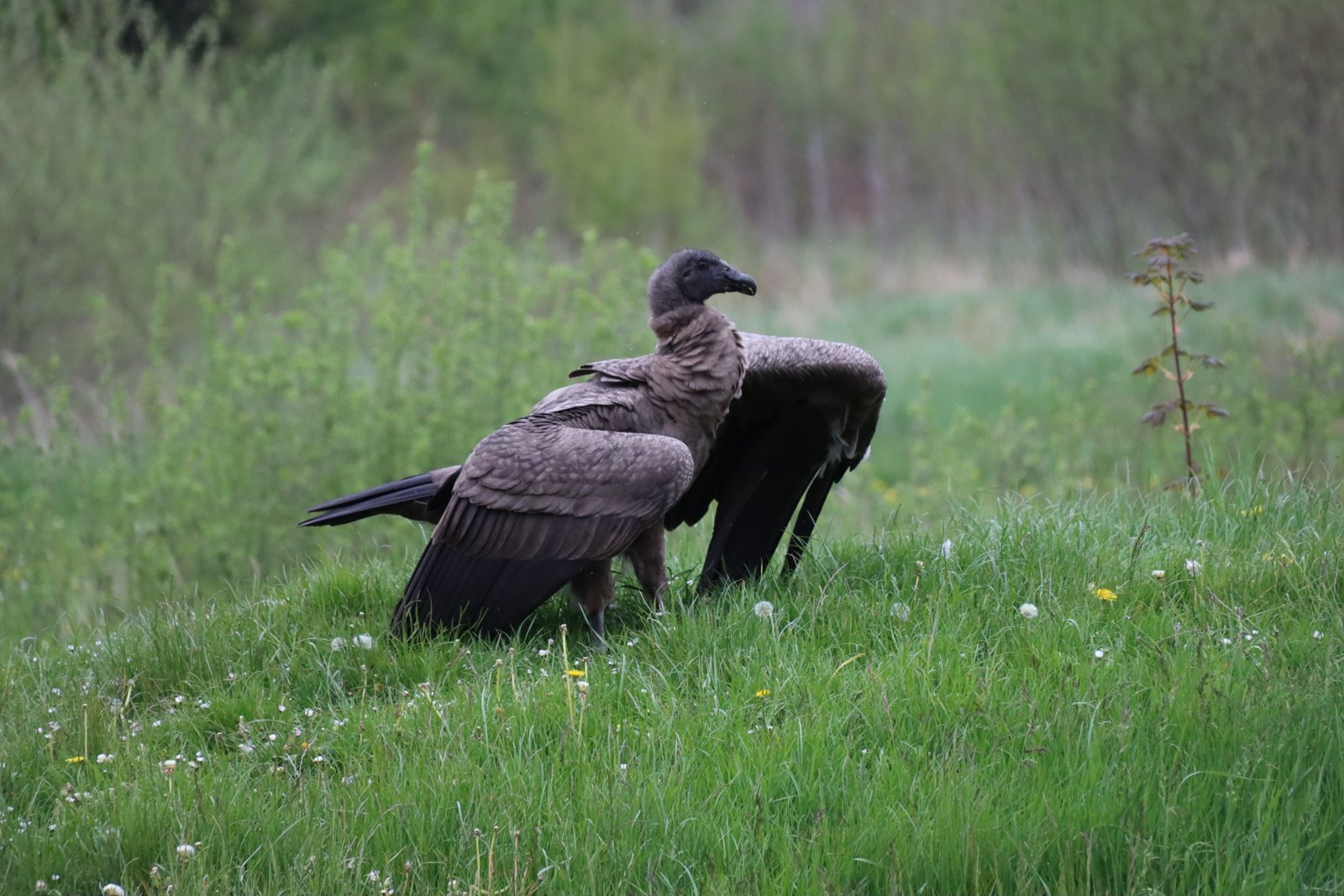 Molina. Photo: Peter Frank Wenzel.
The new study says nothing about condors. But it points in the same direction as our own observations: vultures, Old World and New, are far from as silent as people have believed.
Our bearded vulture Barbatus is far from silent. He has quite a range of different sounds: nest sounds, calls, warnings, sounds during mating and more. Just as with Rüppell's vulture, the sounds therefore belong to particular situations in the bird's life.
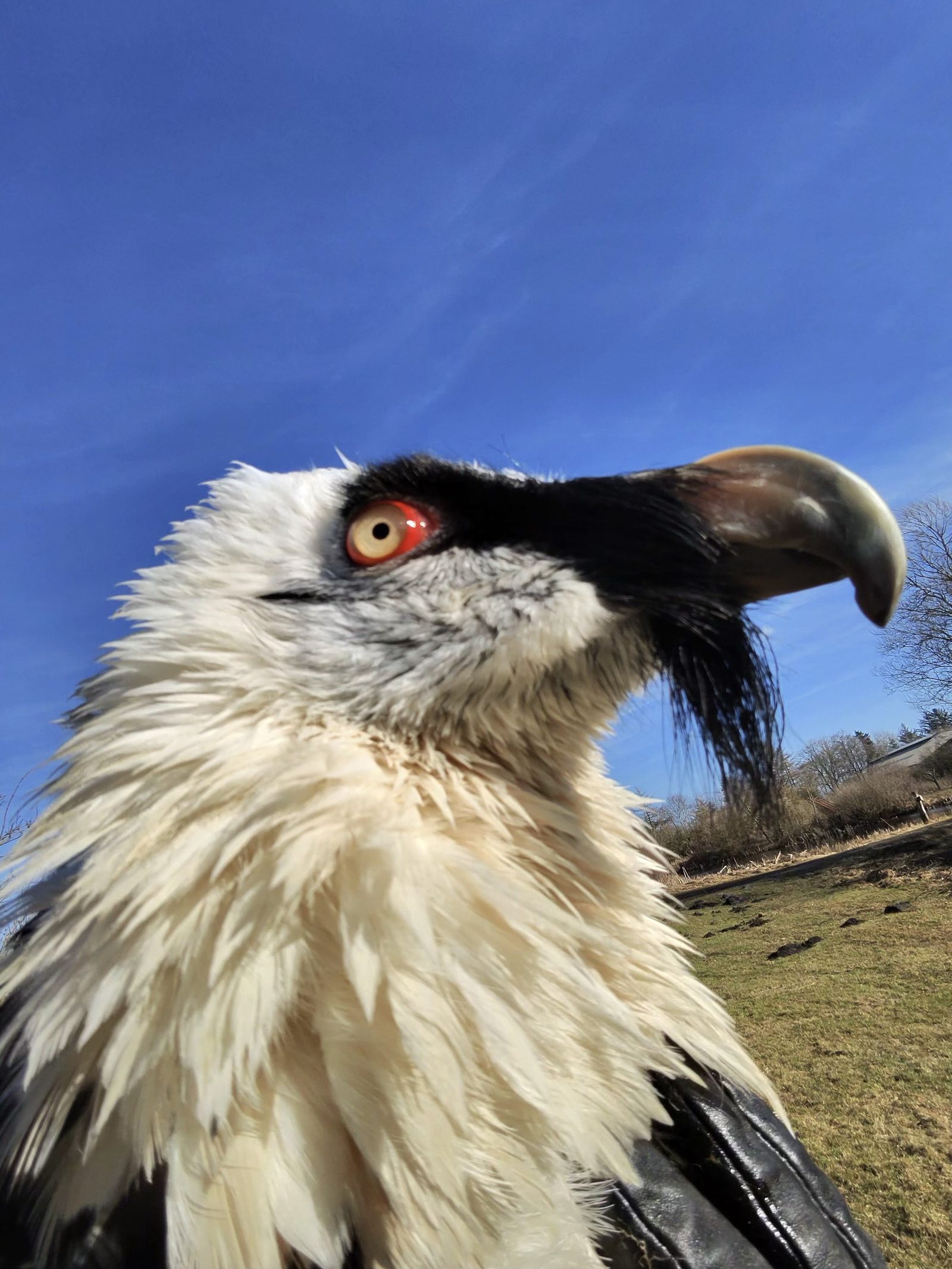 Barbatus up close. Photo: Peter Frank Wenzel.
Vultures are not only about sound. Read also about how they and other birds of prey use sight, smell and hearing, in the article The senses of birds of prey.
What you can listen for
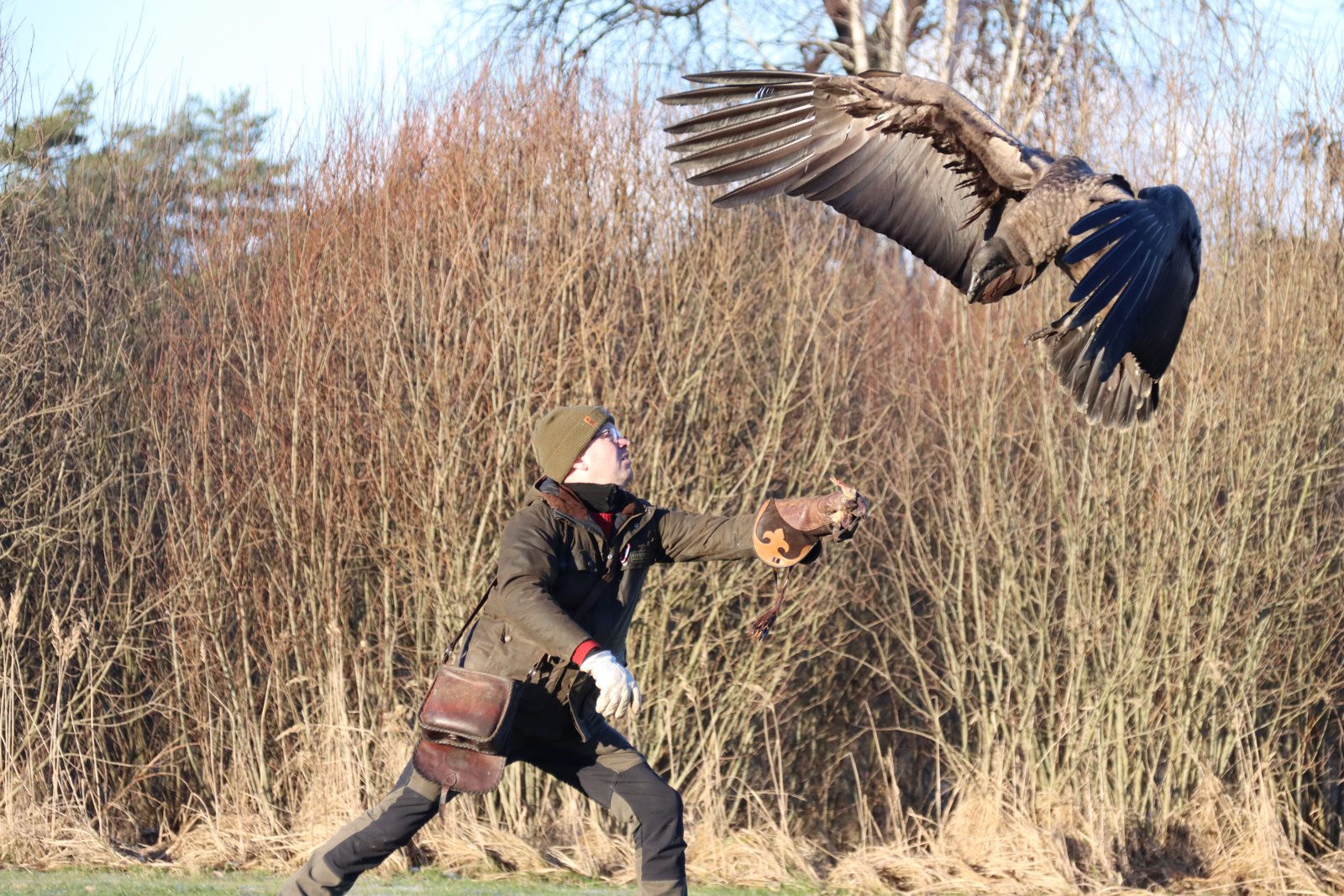 Molina flying to the glove. Photo: Peter Frank Wenzel.
When you visit Eagle World, you may occasionally be lucky enough to hear Barbatus sound — but not every time. Molina's deep sounds, by contrast, you will hear only around her nest.
The research in brief
- Species: Rüppell's vulture, critically endangered (IUCN)
- 35 vultures in two Dutch colonies, 2,500 recorded sounds
- Many call types, both sharply separated and graded
- Sounds for at least eight kinds of social situations
- The chicks already call from inside the egg
- More calls than the average for birds
Sources
- Proudfoot, C., Brons, C.N., Vis, M.W.A., Schel, A.M., van Dijk, E.S.J. & Massen, J.J.M. (2026). The complex, graded vocal repertoire of the social Rüppell's vulture. PLOS One 21(10): e0360246. https://doi.org/10.1371/journal.pone.0360246. Utrecht University.
- Utrecht University (2026). 'Silent' vultures turn out to use a wide range of sounds to communicate. Phys.org, 21 October 2026. https://phys.org/news/2026-10-silent-vultures-wide-range-communicate.html
- Eagle World: Molina – The adult Andean condor expands her vocabulary (8 February 2025) and The silent civilisation of the condors (16 June 2025).