


From scepticism to solar power
We are still hoping for nuclear power in Denmark, but while we wait, we might as well do something sensible on our own property.
In the film below you can follow the work: first when it began, and then as the panels went on the roof and the cables are being laid.
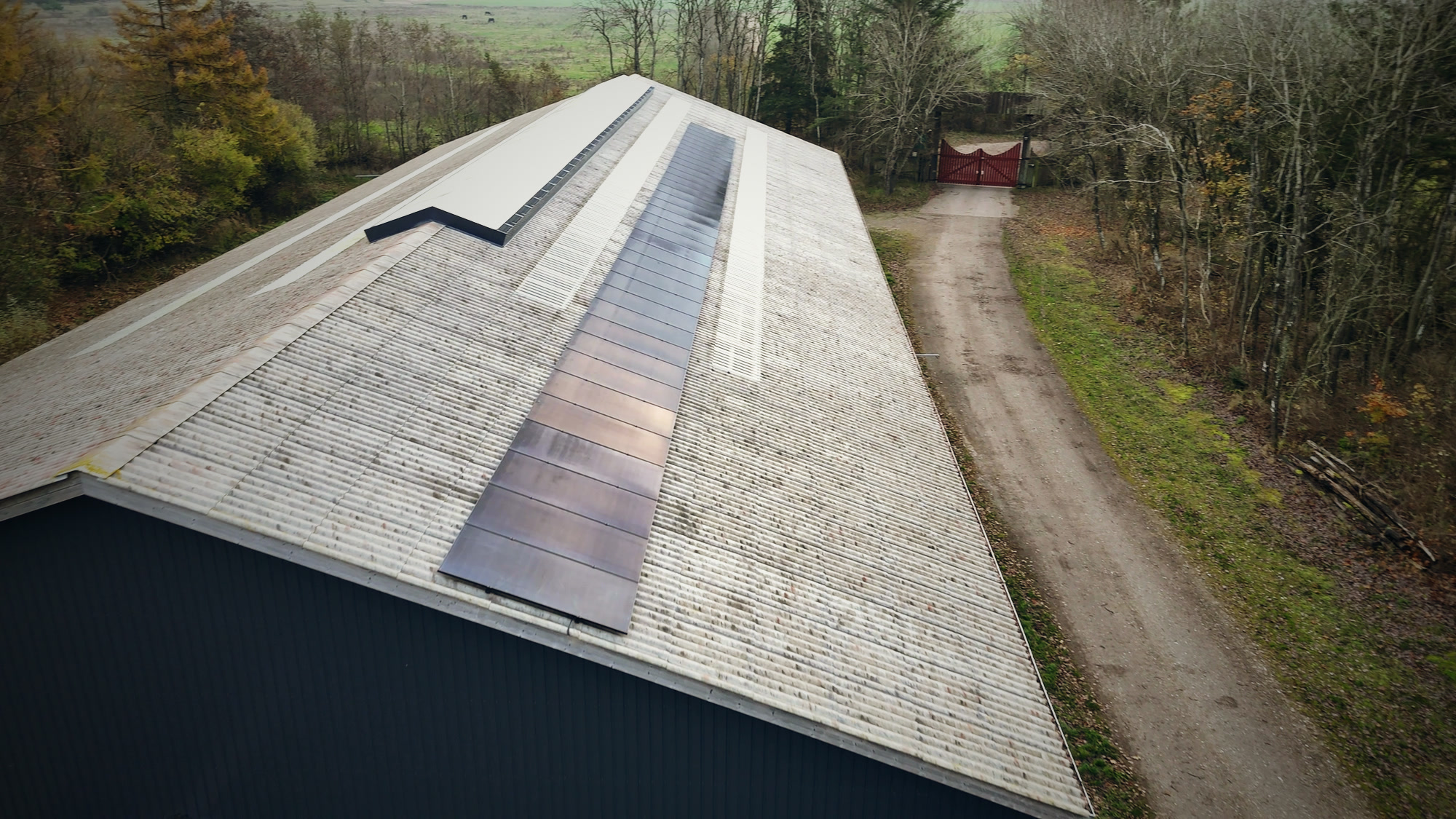 The solar panels are now on the roof of the large hall (10 November 2026). Photo: Eagle World
At Eagle World, between Tversted and Ålbæk, we are starting a new chapter. We have decided to invest in a solar installation of 36 solar panels totalling around 21 kW, which are now on the roof of our large hall and supplemented by a battery of approx. 10 kWh for storing electricity.
The project has been in development here for the past few months. The work is still under way, and we expect to finish around 18 November.
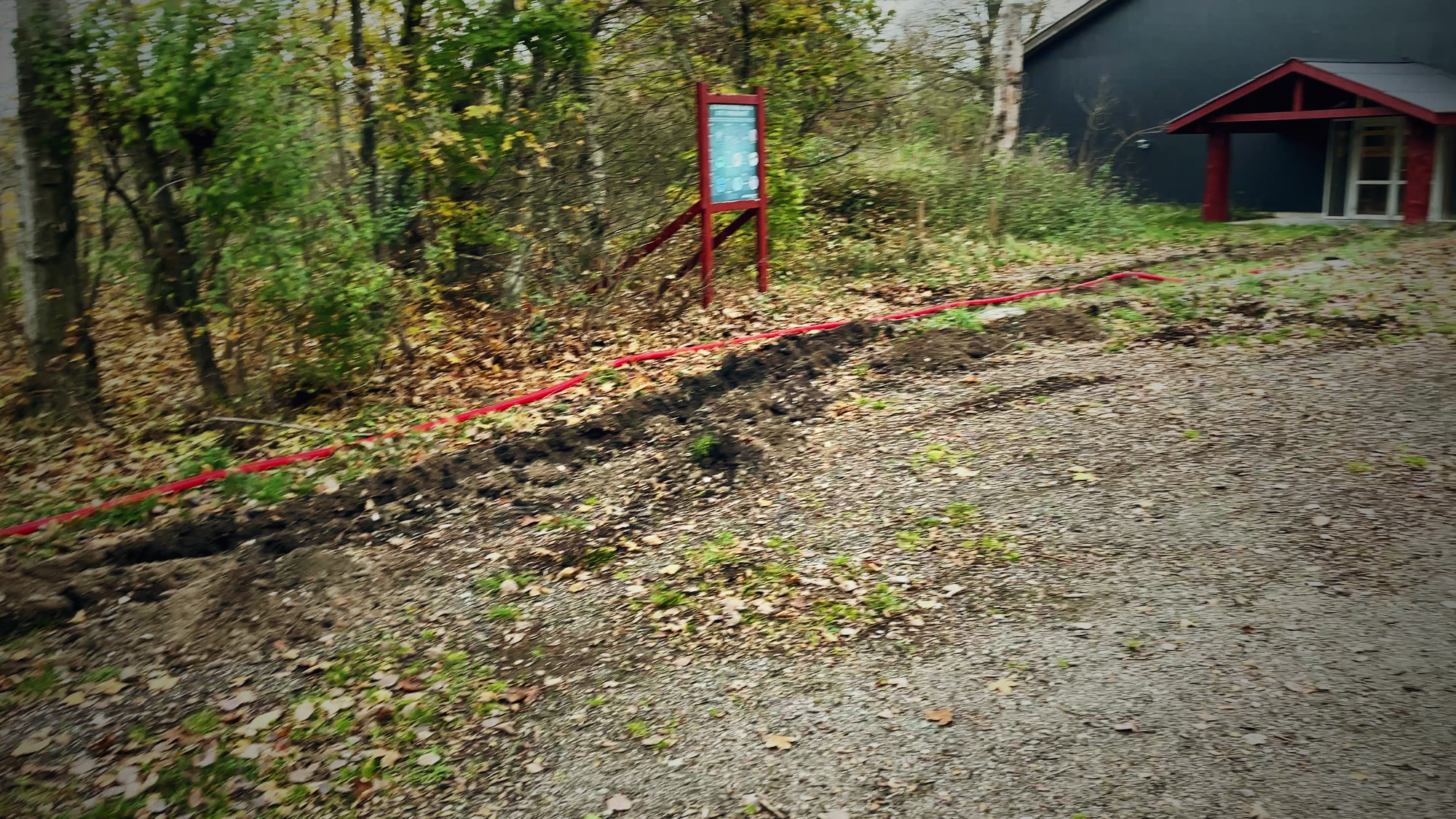 The cables being laid (9 November 2026). Photo: Eagle World
It may sound like a perfectly ordinary green-transition story. But behind the decision lies a good deal of scepticism, many hours of calculations and, not least, a wish for a lower electricity bill.
Over the years I have been critical of parts of the green transition, especially the enormous solar parks spreading across the Danish landscape – the so-called "iron fields", where large areas of farmland and open countryside are covered with solar panels.
It has always puzzled me that we talk so much about protecting nature while being willing to industrialise large parts of it to produce electricity.
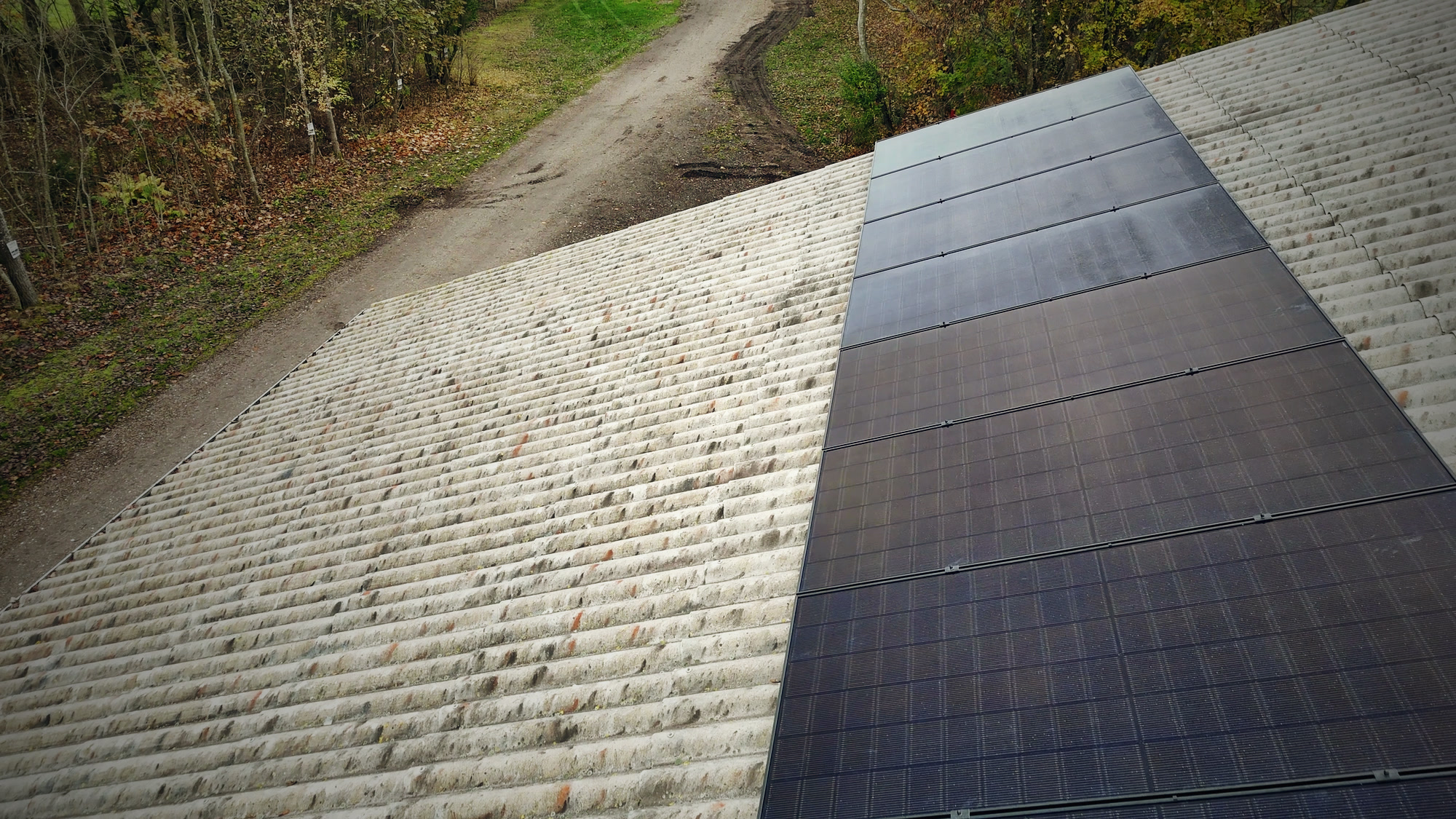 The panels up close – the roof is now working for us. Photo: Eagle World
Why not make far better use of the huge roof areas we already have on factories, farm buildings, businesses and private homes? There, the electricity can even be produced close to where it is used.
We are still hoping for nuclear power
Our decision certainly does not mean that I have changed my view on the energy supply of the future. On the contrary, we still very much hope that nuclear power will one day become part of Denmark's energy supply.
Nuclear power can deliver stable electricity regardless of whether the sun is shining or the wind is blowing. In my opinion, it is a technology we ought to take far more seriously in Denmark.
But while we wait for the politicians perhaps one day to reach the same conclusion, we might as well do something here and now on our own property.
And here, solar panels actually make a lot of sense.
Not to be top of the class in climate
Let me make one thing clear: we are not investing in solar panels to be the climate star pupils of the class or to polish our green halo.
The reason is far more down to earth. We simply want to bring the electricity bill down.
Eagle World has a considerable electricity consumption. Our many freezers holding food for the birds of prey run all year round, and on top of that come heat pumps, heating, lighting, exhibitions, screens, coffee machines and a long list of other installations.
Our power consumption does not take a holiday just because we are closed to visitors.
That is why we have spent a lot of time investigating whether the investment really pays off. We have gone through our electricity accounts and consumption patterns over several years, right down to an hourly level, and compared them with electricity prices and the expected production from the solar panels.
Of course, we have also done the maths on the hours of sunshine here in North Jutland. According to DMI, the Danish Meteorological Institute, the normal for the region is around 1,530 hours of sunshine a year, and the EU's calculation tool PVGIS estimates that 21 kW of solar panels here, optimally placed, can produce around 22,000 kWh a year. These figures are an average – and that is what we are hoping for.
What matters is not only how much electricity a solar installation can produce over a year, but how much of it we can use ourselves – and when.
This is where the battery comes in. It will make it possible to store part of the day's surplus production and use the electricity later, for example in the evening or during the hours when power from the grid is most expensive.
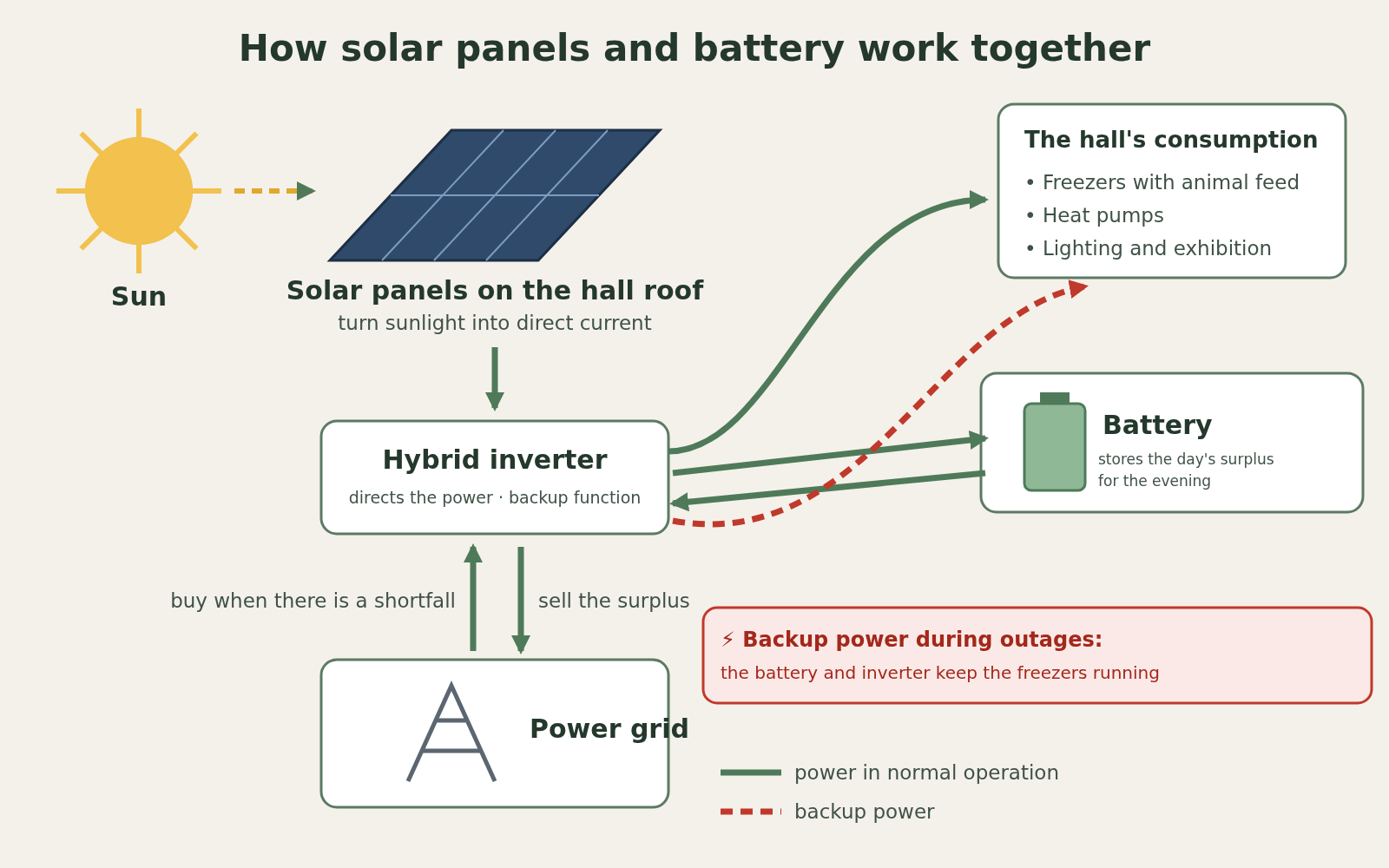 How solar panels and battery work together at Eagle World. Graphic: Eagle World
At the same time, the price of solar panels has fallen considerably over the years, which makes the calculation more interesting than just a few years ago.
And according to our calculations, the investment looks quite sensible.
The Germans have been doing it for a long time
We are far from the first. South of the border, people have for many years been putting solar panels on their barns rather than in their fields. According to Fraunhofer ISE, around two thirds of Germany's solar capacity is installed on buildings, while only around one third stands in open fields.
One example is a dairy farmer in East Frisia with 100 cows and five holiday flats. He has 60 kW of solar panels and a 64 kWh battery. After 20 months of operation, his purchased electricity had fallen from around 45,000 to 10,000 kWh a year – a saving of around 7,700 euros annually.
In the Netherlands, a dairy farmer reports that with solar panels on his barn and a battery pack he is 99.5 per cent self-sufficient, because the milking robots run at night on the day's stored solar power. Other farms have chosen batteries with automatic backup power, so that milking can be completed if the grid goes down.
That is exactly the kind of common sense we would like to follow: the electricity is produced on the roof where it is used, and the battery makes sure it is still there after the sun has gone down.
Backup power is also an important part of the decision
There is, however, one more argument that has weighed heavily.
Security of supply.
We live in a time when power cuts can occur for many different reasons, such as technical faults, severe weather or larger disruptions to the electricity supply.
With battery storage and an inverter with a backup-power function, we will be able to keep selected, essential installations running if the external power disappears. How long depends, of course, on the battery's capacity and the current consumption.
For us it is particularly important to protect the operation of our many freezers, where we store food for the birds of prey.
That gives an extra sense of security that cannot necessarily be read directly from the electricity bill.
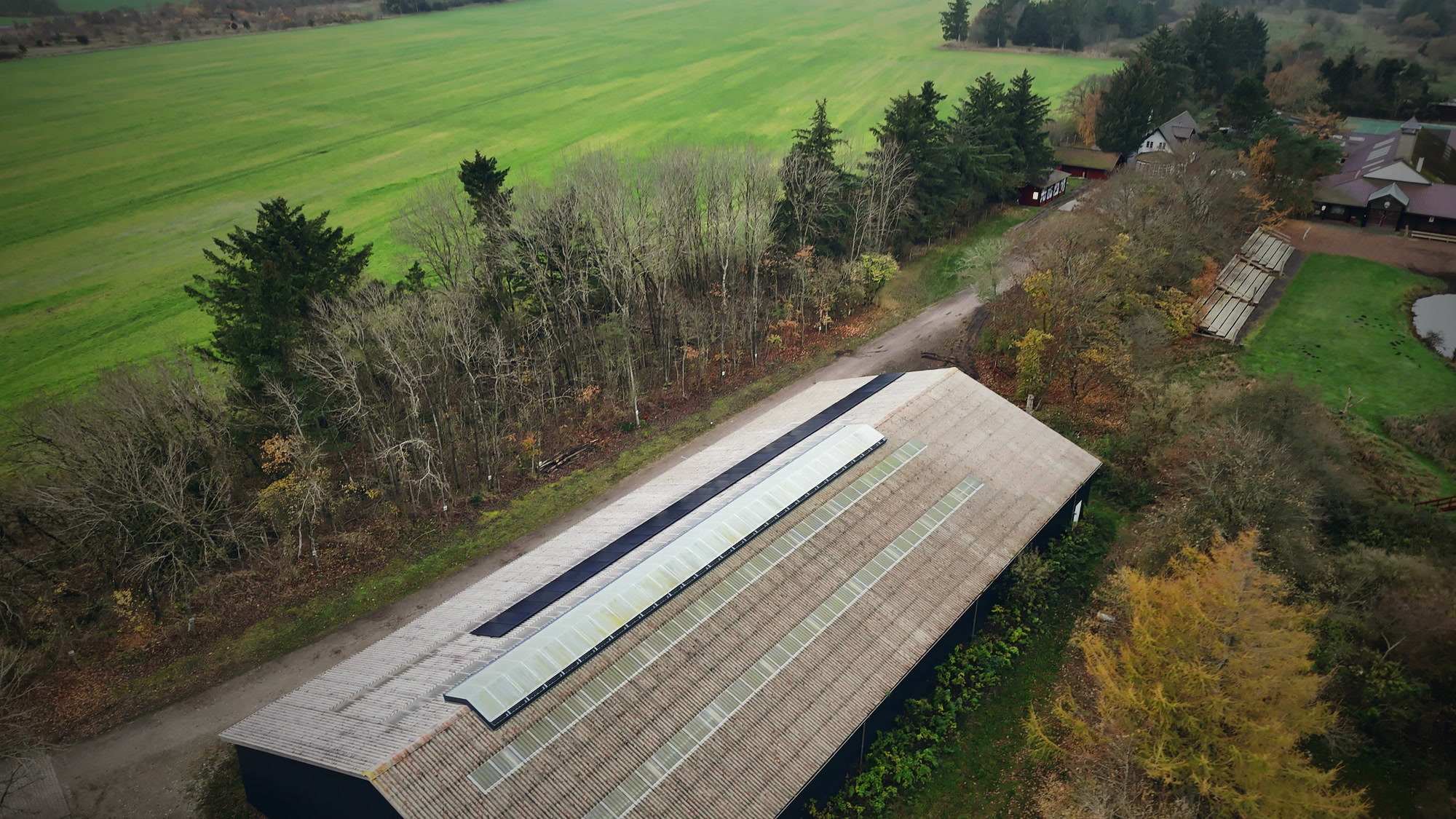 The hall with the solar panels in the landscape at Eagle World (10 November 2026). Photo: Eagle World
Common sense rather than big slogans
I remain sceptical about large parts of the Danish landscape being turned into industrial energy plants. And I still believe that nuclear power should play an important role in Denmark's energy supply in the longer term.
But one does not have to exclude the other.
We have a large roof, a considerable power consumption and now a technology that, according to our calculations, can provide a real financial benefit.
Of course, it will only be after a few years of operation that we can see how accurate the calculations are. The sun does not shine on command, after all, and we will not avoid buying electricity entirely.
But we expect to be able to reduce our electricity costs, become less vulnerable to large price swings and at the same time gain extra security in our daily operations.
And should it all be a gain for the climate as well, we will of course gladly take that too.
Because perhaps the most sensible green transition is not about being as green as possible on paper, but about using technology, money and our nature with care.
And since the sun is shining on the roof of our hall anyway, we might as well get a little financial joy out of it.
Peter Wenzel
Ørnereservatet – Eagle World
Sources: [Fraunhofer ISE: Dezentrale PV als Säule der Energiewende (2026)](https://www.ise.fraunhofer.de/content/dam/ise/de/documents/news/EWS-ISE_2026_Dezentrale-PV-Saeule-Energiewende.pdf) · [photovoltaik.eu: Agrarbetrieb in Ostfriesland (Ommenhof)](https://www.photovoltaik.eu/strom-waerme/agrarbetrieb-ostfriesland-stellt-erfolgreich-auf-solarstrom-um) · [Nieuwe Oogst: Accupakket vergroot het rendement van zonnepanelen (2024)](https://www.nieuweoogst.nl/nieuws/2024/05/02/accupakket-vergroot-het-rendement-van-zonnepanelen) · [DMI: normal for solskinstimer, region Nordjylland 1961–90](https://www.dmi.dk/fileadmin/user_upload/Afrapportering/Aarsoversigter/20110101aarsoversigt.pdf) · [PVGIS (EU-Kommissionen, JRC) – 57,55° N, 10,30° E, 20,9 kWp, 14 % tab](https://re.jrc.ec.europa.eu/pvg_tools/en/)